
Supply chains don’t fail at production. They fail at control.
The Silk Leaf System
From material validation to final delivery.

Most brands don’t fail at design.
They fail at structure.
Suppliers change.
Materials shift.
Production drifts.
No one is really in control.
Without structure, scale turns into risk.
This is how control is built
Material Control
Three Layers of Control
We control what goes into production.
Only verified suppliers.
Only production-grade materials.
Nothing untested enters production.
Execution Control
We control how production runs.
Orders are structured.
Production is monitored on-site.
Nothing runs on assumptions.
Without control, nothing holds.
This is how it holds.
Risk Control
We control how risk is managed.
Payments are structured to reduce risk.
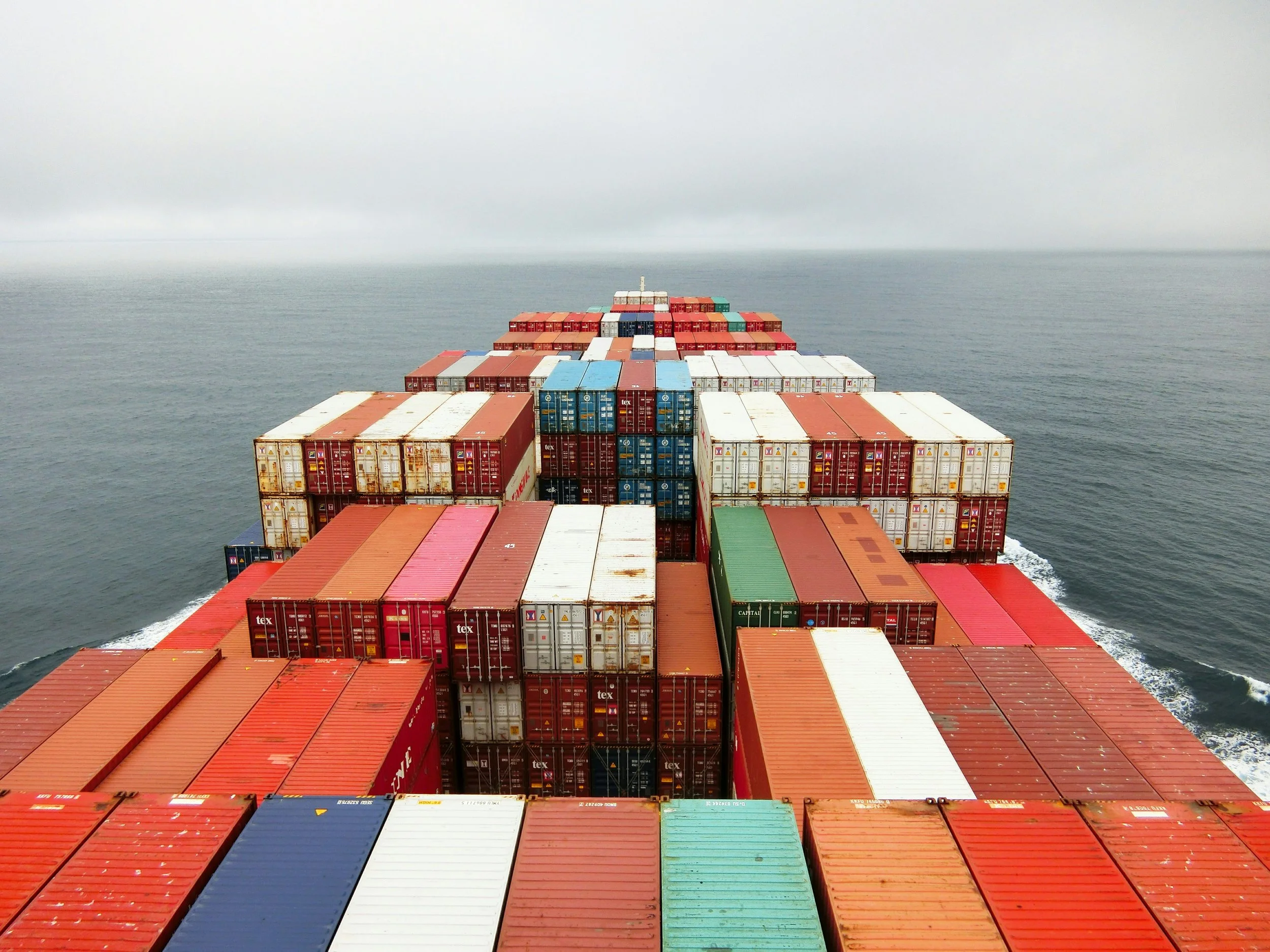
Shipments are controlled across regions.
Exposure is managed, not guessed.
How the
Silk Leaf System Works
INPUT CONTROL
Raw material validation
→ No unstable inputs enter production
↓
EXECUTION CONTROL
Factory alignment & capacity mapping
→ No production drift
↓
ROUTING CONTROL
Multi-country execution (Taiwan–China–Vietnam)
→ No single-point dependency
↓
FINANCIAL CONTROL
Delivery & trade finance structure
→ No cashflow or delivery risk
Control is applied at every stage.
Every stage removes a specific risk.
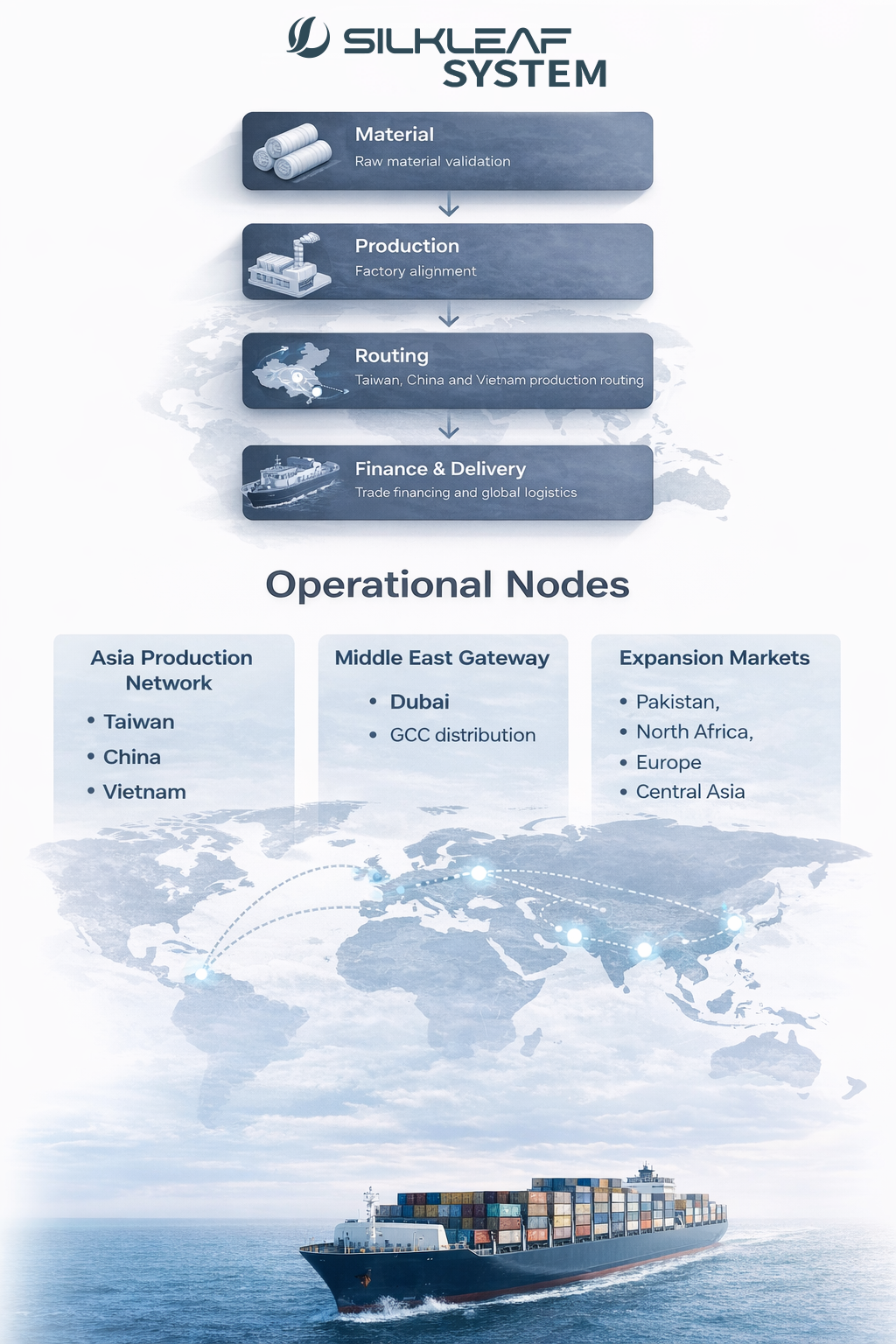
Each layer removes a specific risk:
Material. Production. Routing. Financial exposure.
This is not brokerage.
This is architecture.
Silk Leaf structures supply chains.
We align production, sourcing, and capital.
We build systems that hold under pressure.
Control removes uncertainty.
Structure removes dependency.
Build With Structured Control
Unstructured production is not inefficient.
It is unpredictable.
And unpredictability is where margin is lost.
See where your current structure is already failing.